

You don’t want to be annoyed by your smart home. Sure, you might get frustrated if something is faulty and not working properly. But that does happen from time to time, even with the best smart homes.
What might really drive you nuts is if you aren’t using your smart home properly, but don’t know it. You might feel bombarded by your smart home or confused by it. It may not be making your life simpler than you’d hoped it might have. A smart home is meant to be technologically advanced and capable of giving you peace of mind. But there are common mistakes people make when setting up their smart homes and running them. These mistakes can be so frustrating that people give up on using their smart home devices.
Related
This $15 smart home gadget gives me more peace of mind than a security camera
I use it for a lot of reasons.
Getting notifications for everything
You can be left alone every once in a while
Your smart home can be controlled through a central device, like a Thread border router or a hub. You’re also able to do a lot for your smart home from your phone. Many of the smart home devices come with manufacturer apps that can control them individually, rather than using the Google Home or Amazon Alexa app to work with more of them.
If you have several different devices from various manufacturers, you might have your phone configured to get push notifications for each individual device. In theory, that would make sense because you might want to know what’s going on around your house at all times.
But do you really need push notifications from multiple different apps building up on your lock screen? You can probably understand better what’s happening on each device, but you’re getting too many notifications.
I’ve had it happen where I was working in my garage and, because we have a security camera pointing towards the driveway, any time I would move remotely near the camera, it would trigger an alarm. I was outside for two hours and had 96 notifications of movement on my phone.
While Ring has decided to use AI to better provide descriptions on its notifications, we don’t really need to know a brown dog walked by a yard when it could just say “motion was detected.” Some people probably do prefer having notifications from their smart refrigerator that somebody added an item to the shopping list or that someone made an announcement from one smart speaker to another. For others, they’re just taking up screen space.
Relying on Wi-Fi smart bulbs
They can be a headache, even when they are working
Credit: Chris Hachey / MakeUseOf
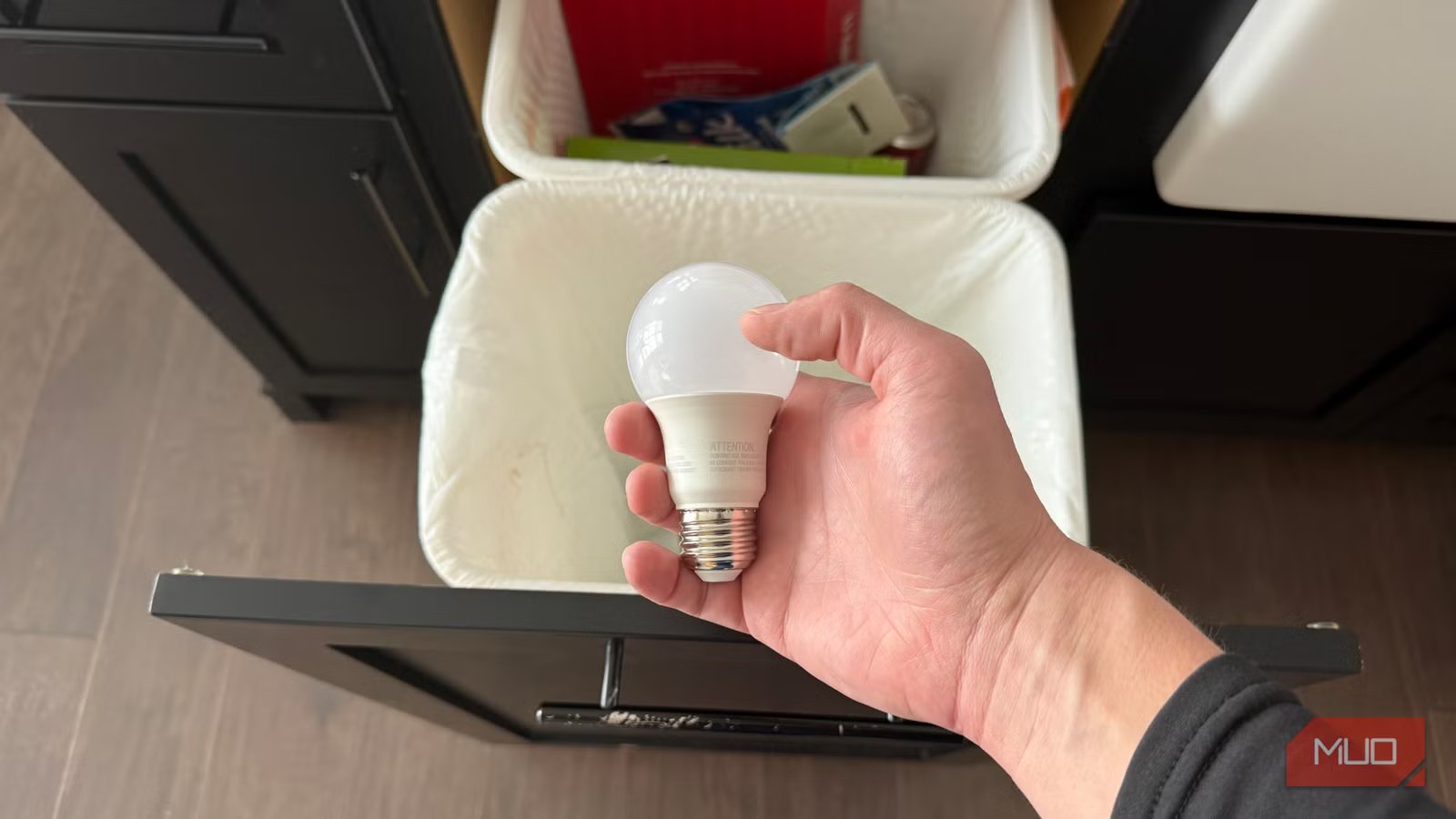
Smart bulbs are some of the most common smart home gadgets you’ll find in homes today. They can sync up with different gadgets as part of home automations. You might use them for mood lighting and some are even security cameras. I personally love using my smart bulbs because I can control them with my voice.
However, Wi-Fi smart bulbs tend to be unreliable. You need to have them powered on, either by turning a lamp to the on position or having your wall switch on at all times. This is something that is easily forgettable and makes them completely useless if they are switched off.
If you have your Wi-Fi smart bulb in a place that isn’t near your router, setting it up can be tricky. I’ve struggled setting up Wi-Fi smart bulbs in my bedroom, which is the room farthest from the router. It can take multiple tries to connect my smart bulb to my internet.
Your hallway is the perfect place to keep a motion sensor. If you’re heading up or down the stairs, the lights can be triggered by the motion sensor and you’ll be able to walk more easily.
The Bluetooth compatibility can suffer if there are walls that the devices must go through in order to connect. Plus, if you happen to lose power for a while, when it does eventually come back on, your smart bulbs will automatically turn on. This happened in my daughter’s room in the middle of the night while she was sleeping, which woke her up in the wee hours and turned our peaceful night sleep into more of a nightmare.
Using automations with sensors and lights in rooms other than hallways
It can be cool if you use it properly
A motion sensor can be a helpful tool if you want to know if anybody is moving around your home. But the best part about a motion sensor is using it as part of an automation.
Typically, people use motion sensors to trigger lights to turn on. This makes a lot of sense, as they can illuminate an area that you’re about to walk into, lighting the way so you don’t have to walk in the dark. Plus, it eliminates your need to turn on a light when you get there.
While it’s a popular use of a smart home gadget, which usually requires an individual app or a hub to run properly, adding to the stress of setting them out, it may not be practical to use this automation in a specific spot in your home.
Your hallway is the perfect place to keep a motion sensor. If you’re heading up or down the stairs, the lights can be triggered by the motion sensor and you’ll be able to walk more easily. But do you really need lights to turn on if you’re walking into the dining room or any other room of the house?
Because you’re using smart lights anyway, you’ll be able to turn them on with voice commands. So, if you want to have the room lights on before you get in there, you can say so, rather than having potentially lower traffic areas with sensors and lights on automation.
Use automation in hallways that tend to be darker, where there aren’t typical windows. Leave the open space rooms to rely on a wall switch.
You don’t have the Wi-Fi strength to keep up
Having a lot of smart home devices takes its toll
Credit: Chris Hachey / MakeUseOf
If you’re using your smart home gadgets, they take up Wi-Fi. There’s no way you can make them all wired devices, so you have to rely on Wi-Fi to power them.
As you build up a bigger inventory of smart devices, your Wi-Fi is going to be pulled in many different directions. If you have too many devices on your Wi-Fi, it will cause them to run more slowly or even not connect when you need them to.
Having smart devices go offline when you want to utilize them renders them useless. Batteries will drain as they look for a signal, potentially causing them to die while they’re in use, assuming you’re able to get them connected.
You can set up something like a VLAN or a guest network for your smart home devices to keep them separated from your other Wi-Fi gadgets. This is arguably the smartest way to keep your home running smoothly if you have a lot of smart home devices.
Relying on cheaper products rather than tested ones
You don’t want to segment your selections too much
Image Credit: Tech StudyCell/YouTubeImage Credit: Tech StudyCell/YouTube
Maybe you want to build your own smart home hub to run your system using an old device, like a Chromebook. This is a proven way to upgrade your system and use something that you might have thought had passed its prime.
Some people might just want to buy the cheapest smart home device possible in order to save money. This can be effective if you don’t mind relying on individual apps rather than larger smart home ones, as they tend to be less widely compatible with smart home standards and ecosystems.
Make sure to read the box carefully and to not only see what other tech it is compatible with but what version of that tech works with it. You want to make sure it’s the same as what else you have at home.
These cheap devices can also make for a more dangerous purchase for you, as their security is usually thin, making your smart home network a target. They might stop working after a firmware update as well, making your purchase not a long-lasting one.
It’s better to go with a proven company, as they are likely to provide you with a better experience. Plus, you are probably going to find devices that work well together.
These smart home mistakes can be stopped
Be smarter about your smart home devices. You can find ones that work better together, as plenty can work across ecosystems with Matter and Thread. Smart home devices should make things smoother around your home and not force you to try and reconnect them every time you use them. Keep in mind what your Wi-Fi connection is like when considering how many smart home devices to add to your network. Set your smart home up for success.
