

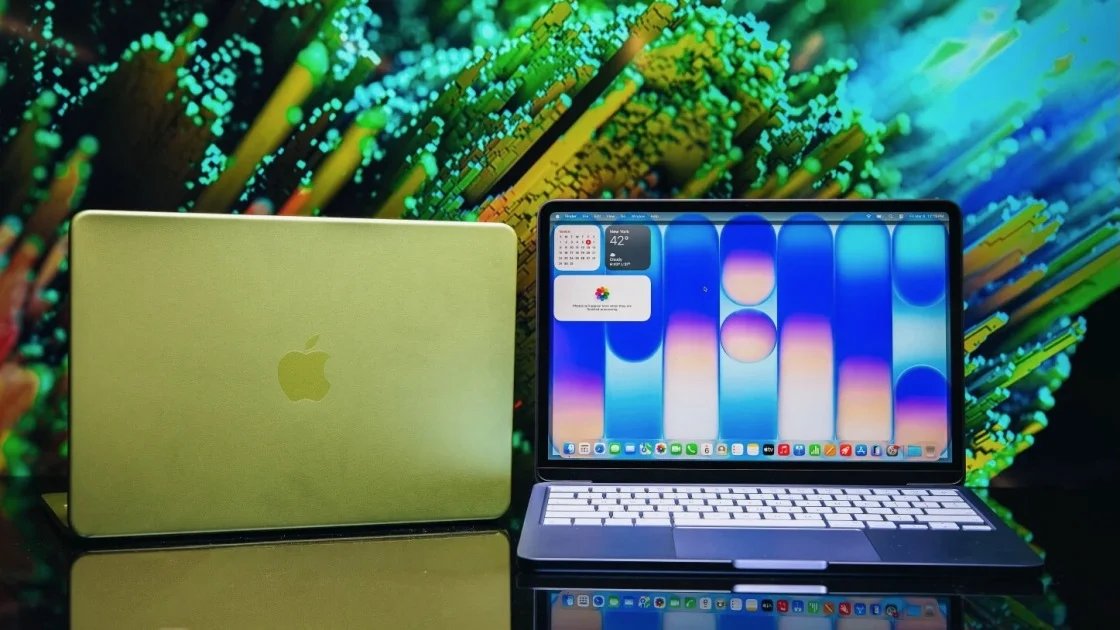
Apple’s MacBook Neo is winning rave reviews, including from a former Microsoft executive.
“I am completely blown away by it. It is a paradigm-shifting computer,” former Windows chief Steven Sinofsky tweeted on Wednesday.
Sinofsky is among the customers who bought a $599 MacBook Neo on launch day. But in his case, the release is bittersweet, since he once led Microsoft’s effort on 2-in-1s running the infamous Windows RT more than a decade ago.
The OS, which dates back to 2012, was designed for Arm chips rather than traditional x86 processors, with the goal of producing thinner, lighter, and more power-efficient devices. However, it struggled to take off (as did Windows 8), and Sinofsky left Microsoft in late 2012.
Years later, starting in 2020, Apple also began migrating from x86 to Arm with its MacBooks. But unlike Windows RT, Cupertino’s approach has produced well-received laptops year after year, eventually resulting in the MacBook Neo, its most affordable laptop yet.
So it isn’t surprising that Sinofsky is feeling a “bit melancholy,” as he wrote in his post on X. “I sat there looking at my Neo and admit and apologize, but all I could feel was a bit of ‘what could have been,’” he added.
Steven Sinofsky in 2012. (Credit: Scott Eells/Bloomberg via Getty Images)
The former Windows chief noted that in computing history, industry players sometimes develop a product that’s ahead of its time but whose execution is off, resulting in a flop. Originally, Sinofsky concluded that his own efforts with Windows 8 and RT followed the same path. But the MacBook Neo makes him wonder whether Microsoft could have produced something similar with a premium but affordable, high-performing Arm laptop.
“So when I thought about Windows 8 over the past dozen years, I quite often settled on being early AND wrong or too much too soon when I didn’t want to feel that bad,” he wrote. “But today I’m using Neo and thinking about Windows 8 and Surface, and I have to admit I’m struggling with that conclusion. We had all the pieces and all the pieces worked then.”
However, Sinofsky said one key difference between Microsoft and Apple is their approach to apps. Apple has long had a more closed software ecosystem, especially on iOS, which continues to revolve mainly around Apple’s own app store. According to Sinofsky, the result has paved the way for more efficient and secure apps.
Get Our Best Stories!
Love All Things Apple?
Sign up for our Weekly Apple Brief for the latest news, reviews, tips, and more delivered right to your inbox.
Sign up for our Weekly Apple Brief for the latest news, reviews, tips, and more delivered right to your inbox.
By clicking Sign Me Up, you confirm you are 16+ and agree to our Terms of Use and Privacy
Policy.
Thanks for signing up!
Your subscription has been confirmed. Keep an eye on your inbox!
(Credit: Kevork Djansezian/Getty Images)
In contrast, Microsoft was too focused on ensuring that the Windows ecosystem around x86 chips remained open and could run legacy programs, Sinofsky says.
“The pull and push of forever compatibility was not just ‘Windows DNA,’ but it was the soul of what made Windows successful and was sacred. But it was obvious then and now that it was the part that needed to change,” he wrote.
Another key difference is that Apple has been designing the Arm processors for MacBooks, along with the iPhone. However, Sinofsky is convinced that its third-party processor maker at the time, Nvidia, could have helped Microsoft accomplish the same over a decade ago.
“There are a million ways (ok just a few dozen) this is complete fantasy and would never have worked. But I couldn’t help myself in using Neo today,” he added.
Recommended by Our Editors
Although Windows RT failed to take off, the Windows on Arm efforts re-emerged in 2018. Since then, Microsoft has created Arm-based Windows laptops using Qualcomm processors. Some have even arrived for around $600. So it’s not like Microsoft hasn’t been trying.
Still, Sinofsky suggests that Microsoft should have remained committed to Windows RT early on, which would have paid off in the long-term.
“There’s no escaping my ‘certainty’ that had we kept going and been able to round the corner with developers to build new apps, we would have been in the same spot Neo is today in just a few years,” he wrote. “Ironically, the rescue plan I suggested to new leaders after I left Microsoft in 2012–13 was to turn RT into what was just announced as Chromebook focused on corporate use. And how are people talking about Neo today? A better Chromebook.”
Apple’s MacBook Neo, Tested: This is 2026’s Breakout Budget Laptop
Sinofsky wrote his post after an Asus co-CEO, S.Y. Hsu, also called the MacBook Neo a “shock” to the PC industry, noting its low price while Apple has focused more on higher-end products. Still, Hsu noted the MacBook Neo only features 8GB of RAM and might not appeal to Windows users who prefer Microsoft’s OS.
However, Sinofsky didn’t encounter a major limitation with the Neo. “I spun up all my apps, photos, and so on. I could not tell the difference between this and my MacBook Air,” he wrote. “Max memory use was just under 7GB in the first couple of hours… All the ‘compromises’ are totally acceptable and go unnoticed to me.”
About Our Expert
Michael Kan
Senior Reporter
Experience
I’ve been a journalist for over 15 years. I got my start as a schools and cities reporter in Kansas City and joined PCMag in 2017, where I cover satellite internet services, cybersecurity, PC hardware, and more. I’m currently based in San Francisco, but previously spent over five years in China, covering the country’s technology sector.
Since 2020, I’ve covered the launch and explosive growth of SpaceX’s Starlink satellite internet service, writing 600+ stories on availability and feature launches, but also the regulatory battles over the expansion of satellite constellations, fights with rival providers like AST SpaceMobile and Amazon, and the effort to expand into satellite-based mobile service. I’ve combed through FCC filings for the latest news and driven to remote corners of California to test Starlink’s cellular service.
I also cover cyber threats, from ransomware gangs to the emergence of AI-based malware. Earlier this year, the FTC forced Avast to pay consumers $16.5 million for secretly harvesting and selling their personal information to third-party clients, as revealed in my joint investigation with Motherboard.
I also cover the PC graphics card market. Pandemic-era shortages led me to camp out in front of a Best Buy to get an RTX 3000. I’m now following how President Trump’s tariffs will affect the industry. I’m always eager to learn more, so please jump in the comments with feedback and send me tips.
Read Full Bio
